SNGPL Gas Meter Reading – How to Check Your Monthly Consumption
Checking your monthly gas usage helps you understand your bill and manage household expenses. SNGPL Gas consumers can learn how to read their gas meters, compare monthly readings, and understand how consumption affects their bills. By checking the meter regularly, you can identify unusual changes and keep a record of your usage.
This guide explains SNGPL Gas Meter Reading, how to calculate monthly consumption, and what to check when your gas bill seems higher than expected.
What Is an SNGPL Gas Meter Reading?
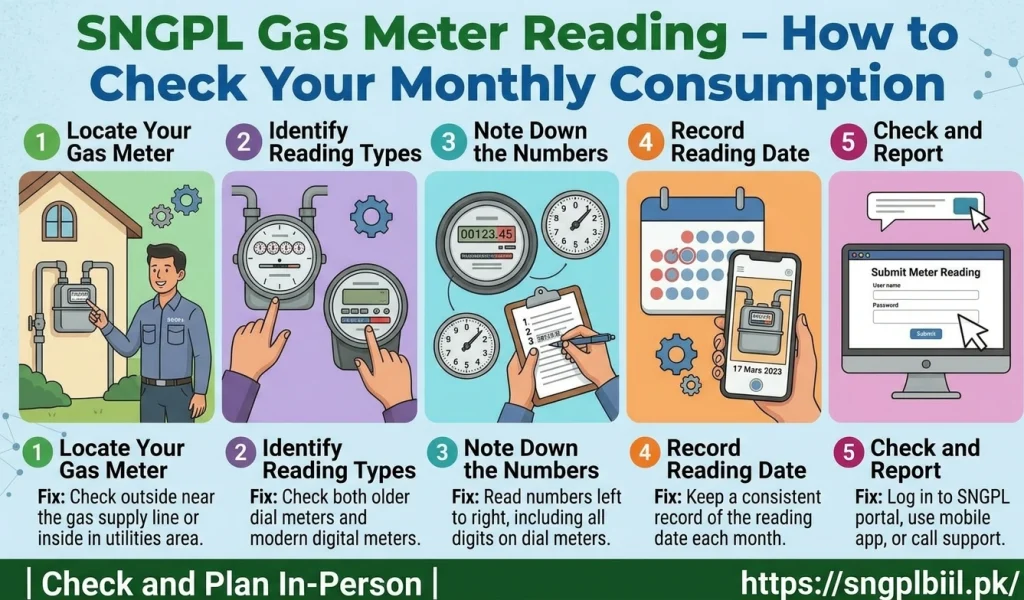
A gas meter records the amount of natural gas used at your home or business. The meter reading helps the gas utility calculate your consumption for a billing period.
Your bill may include opening and closing readings, consumed units, applicable charges, taxes, and the total payable amount. The exact format and measurement units can vary, so always check the details printed on your bill.
How to Check Your Monthly Gas Consumption
Follow these simple steps to track your gas usage:
- Locate your gas meter: Find the installed meter, usually near the property entrance or an outside wall.
- Read the displayed numbers: Record the digits shown on the meter. Follow its labels and instructions, and distinguish whole numbers from decimal digits if present.
- Note the date: Write down the reading date so you can compare readings over a consistent period.
- Check the next reading: After approximately 30 days, record the meter display again.
- Calculate the difference: Subtract the earlier reading from the later reading, provided both readings use the same units and format.
For example, if your meter shows 1,250 at the beginning of the month and 1,278 at the end, the difference is 28 meter units. This is an illustrative calculation; it may not equal the final billed consumption if your bill uses conversion factors or other adjustments.
How SNGPL Gas Meter Readings Affect Your Bill
Your gas bill depends on recorded consumption and the applicable tariff and billing rules. Other items, such as fixed charges, taxes, adjustments, or previous balances, may also affect the total amount.
When reviewing your bill, check these details:
- Previous reading: The earlier meter reading used for billing.
- Current reading: The latest reading recorded for the billing period.
- Consumed units: The usage calculated from the readings and any applicable conversion.
- Billing period: The dates covered by the bill.
- Charges and taxes: The amounts added under the applicable billing rules.
If the readings or billing period appear incorrect, compare them with your own records and contact the utility through its official customer service channels.
Tips to Monitor Monthly Gas Consumption
Keeping track of your usage can help you spot unusual changes and improve household budgeting.
- Record your meter reading on the same date each month.
- Keep previous readings in a notebook or spreadsheet.
- Check that the meter is visible and accessible for an accurate reading.
- Compare consumption across similar billing periods.
- Maintain gas appliances according to the manufacturer’s instructions.
- If you smell gas, avoid flames and electrical switches, leave the area, and contact the appropriate emergency gas service from a safe location.
A sudden increase in usage does not automatically mean the meter is faulty. Weather, heating habits, appliance use, and the length of the billing period can all affect consumption.
What to Do If Your Gas Bill Seems Incorrect
If your bill shows unusually high usage, first compare the current and previous readings. Confirm that you are checking the correct meter and that the dates match the billing period.
Next, review the units and any conversion information printed on the bill. Do not assume that every meter displays the same unit or that a simple difference always matches the final billed quantity.
If the problem remains, contact SNGPL through its official website or customer service channels. Keep a copy of the bill, your recorded readings, and the dates you checked the meter. These details can help explain the issue when requesting a review.
Benefits of Regular SNGPL Gas Meter Reading
Regular SNGPL Gas Meter Reading helps you monitor monthly consumption and compare your current usage with previous months. Keeping a record of each reading can help you notice unexpected changes and review your gas bill more carefully.
Keep an Accurate SNGPL Gas Meter Reading Record
For better tracking, write down your SNGPL Gas Meter Reading on the same date every month. Compare the recorded figures with your latest bill and contact SNGPL through its official support channels if you notice a significant difference.
Frequently Asked Questions
How often should I check my gas meter?
Checking once a month is a useful way to monitor household consumption. You can also take readings more frequently if you want to identify changes in usage.
Can I calculate my bill using the meter reading alone?
Not always. The reading difference helps estimate usage, but the final bill may include conversion factors, tariff rates, taxes, fixed charges, or adjustments.
What if my meter reading has not changed?
Check the meter display and compare it with your previous record. If the reading remains unchanged despite normal gas use, contact the utility for guidance rather than attempting to open or repair the meter yourself.
Where can I check official billing information?
Use the official Sui Northern Gas Pipelines Limited website at https://www.sngpl.com.pk/ for available services, notices, and customer support information.
Conclusion
Regular SNGPL Gas meter checks help you understand household consumption and review your monthly bill more confidently. Record readings consistently, calculate the difference carefully, and check the billing period and applicable charges. If your SNGPL Gas Meter Reading or billed consumption appears incorrect, keep your records and contact the utility through its official channels for assistance.