Why Is Your SNGPL Gas Bill Higher This Month? Common Reasons Explained
SNGPL Gas Bill Higher This Month? You are not alone. Many gas consumers notice a sudden increase in their monthly bills and wonder why they are being charged more than before. Sometimes the reason is increased gas consumption, while in other cases, meter readings, tariff changes, taxes, or previous outstanding amounts can affect the total bill.
Before assuming that your gas meter is faulty, it is important to understand how your bill is calculated and which charges have increased. This guide explains the common reasons behind a higher SNGPL gas bill, how to check your bill details, and what to do if you believe the charges are incorrect.
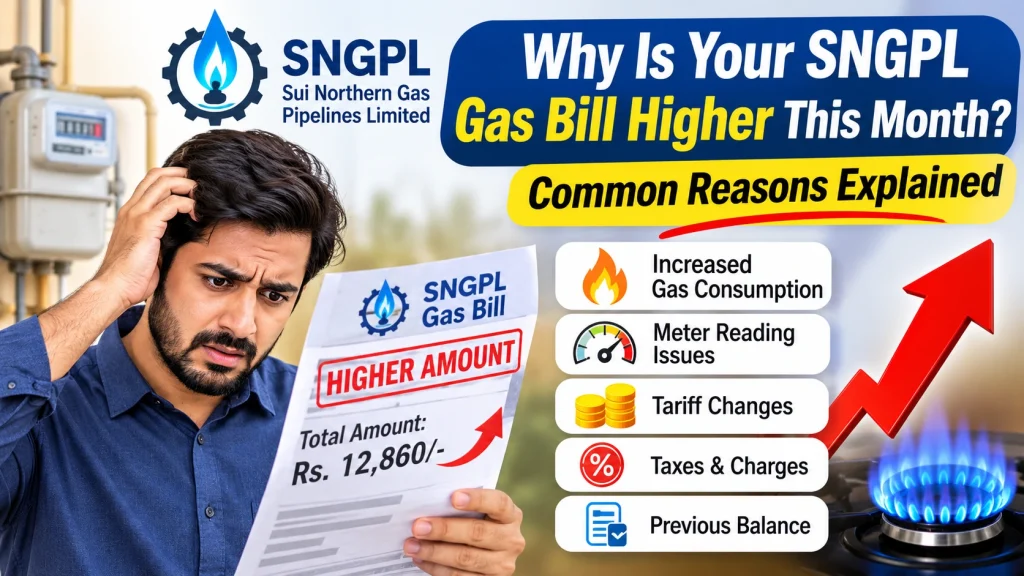
Why Is Your SNGPL Gas Bill Higher This Month?
There is no single reason for every increase. Your monthly bill depends on several factors, including gas consumption, applicable tariff, meter reading, taxes, and adjustments. Here are seven common reasons that may explain the increase.
1. Increased Gas Consumption
One of the most common reasons for a higher gas bill is increased consumption. During colder months, households generally use gas for longer periods because of heating, cooking, and water heating.
Even a small increase in daily usage can affect your monthly charges. For example, using a gas heater for several extra hours each day may increase the total units recorded by your meter.
What to check:
- Compare current and previous meter readings.
- Review the consumption units on both bills.
- Check how frequently you use heaters, geysers, and gas stoves.
- Look for appliances that may be consuming more gas than usual.
2. Incorrect or Estimated Meter Reading
Your SNGPL bill is calculated using meter-reading information. If the reading is recorded incorrectly or an estimated reading is used, the billed consumption may not match your actual usage.
An estimated bill may also be adjusted in a later billing cycle when an actual reading becomes available.
What to do: Compare the current meter reading printed on your bill with the reading displayed on your physical gas meter. Take a clear photograph of the meter showing its reading and date. If there is a noticeable difference, contact SNGPL and request a meter-reading verification.
3. Changes in Gas Tariff Rates
Gas tariffs can change following government and regulatory decisions. If the applicable tariff for your consumer category increases, your bill may become higher even when your consumption remains similar.
The amount you pay can also depend on your consumer category and applicable billing rules. Therefore, comparing only the final amount of two bills may not explain the increase.
What to check: Review the tariff category and applicable rates shown on your bill. For updated information, consult the official SNGPL website and relevant government or regulatory announcements.
4. Protected and Non-Protected Consumer Category
SNGPL domestic consumers may fall under different billing categories, including protected and non-protected categories, according to the applicable rules.
If your household’s consumption or eligibility status changes, your billing category may also be affected. This can make a significant difference to the amount payable.
Check your bill to identify whether you are listed as a protected or non-protected consumer. If you believe your category is incorrect, contact SNGPL and ask for an explanation of the classification and the applicable criteria.
5. Taxes, Fixed Charges, and Other Bill Adjustments
Your gas bill may include charges in addition to the cost of gas consumed. Depending on the applicable billing rules, these can include fixed charges, general sales tax, meter-related charges, and other adjustments.
These amounts can change the final payable total. That is why it is useful to examine the individual bill components rather than looking only at the total amount.
Check these items on your bill:
- Gas consumption charges
- Fixed charges, where applicable
- General sales tax
- Meter rent or other applicable charges
- Previous balance and adjustments
If a charge is unfamiliar, ask SNGPL to explain how it was calculated.
6. Previous Unpaid Balance or Late Payment Surcharge
Sometimes a bill appears higher because it includes an outstanding amount from an earlier month. A previous unpaid bill, partial payment, or late payment surcharge may increase the current payable amount.
Check the arrears, previous balance, and surcharge sections of your bill. If you already paid the previous bill, compare your payment receipt with the account details. Contact your payment provider or SNGPL if the payment has not been reflected correctly.
7. Gas Leakage or Faulty Appliances
A gas leak or an inefficient appliance can contribute to unnecessary gas consumption. Damaged connections, faulty geysers, or poorly maintained heaters may also affect usage.
If you notice a gas smell, do not try to locate or repair the leak yourself. Avoid flames and electrical switches, leave the area, and contact the gas utility or emergency service from a safe location.
For unusually high consumption without an obvious reason, arrange an inspection by a qualified technician.
How to Check Whether Your SNGPL Bill Is Correct
If your bill has increased unexpectedly, follow these steps before submitting a complaint:
- Open your latest bill: Keep your current and previous bills available for comparison.
- Compare meter readings: Check the previous and current readings printed on both bills.
- Review consumption: Compare the billed units or consumption figures.
- Check the tariff category: Confirm whether your protected or non-protected status is correct.
- Review additional charges: Look for taxes, fixed charges, arrears, and adjustments.
- Compare the physical meter: Make sure the reading on your meter matches the bill.
- Save supporting evidence: Keep bill copies, meter photographs, and payment receipts.
These checks can help you identify whether the increase is related to actual usage, billing calculations, or an account issue.
How to Complain About an Incorrect SNGPL Gas Bill
If you find an incorrect meter reading, an unexplained charge, or a billing-category problem, contact SNGPL through its official website or customer-service channels.
Before contacting the company, prepare:
- Your SNGPL consumer number
- A copy of the latest gas bill
- Previous bill copies
- A clear photograph of your meter reading
- Payment receipts, if relevant
- A short explanation of the issue
Clearly explain why you believe the bill is incorrect and request verification. Keep your complaint or reference number so you can follow up on the matter.
Frequently Asked Questions
1. Why has my SNGPL gas bill suddenly increased?
Your bill may have increased because of higher gas consumption, a tariff change, an incorrect or estimated meter reading, taxes, outstanding balances, or other adjustments.
2. Can a wrong meter reading increase my gas bill?
Yes. If the recorded reading is higher than the actual meter reading, your billed consumption may be incorrect. Compare the physical meter reading with your bill and report any difference.
3. Does gas consumption increase during winter?
Households often use more gas during colder months for heating and water heating. This additional usage can increase monthly consumption and the final bill.
4. What is the difference between protected and non-protected consumers?
These are different domestic billing categories under applicable government rules. The criteria and tariff treatment can differ, so consumers should check their bill and confirm their category with SNGPL.
5. Can taxes make my SNGPL bill higher?
Yes. Taxes and other applicable charges can contribute to the final payable amount. Review the individual charges printed on your bill to understand the increase.
6. What should I do if my SNGPL bill is much higher than my actual usage?
Compare the meter reading, consumption, tariff category, and additional charges. If you find an error or cannot understand the calculation, submit a complaint to SNGPL with supporting documents.
7. Where can I check my SNGPL gas bill online?
You can use SNGPL’s official website at https://www.sngpl.com.pk/ to access its available online services and bill-related information.
Conclusion
If your SNGPL Gas Bill Higher This Month issue has caught you by surprise, start by checking your gas consumption, meter reading, tariff category, taxes, and previous balance. A higher bill does not always mean that your meter is faulty or that the company has made a mistake.
Compare your latest bill with the previous one and keep evidence of any discrepancy. If the readings or charges appear incorrect, contact SNGPL and request a proper verification. Understanding each part of your bill can help you identify the reason for the increase and avoid similar problems in future.