SNGPL Gas Bill Tariff 2026 – Understanding Domestic Gas Rates
SNGPL Gas Bill Tariff 2026 is an important topic for domestic gas consumers who want to understand how their monthly gas bill is calculated. The amount on an SNGPL bill depends on factors such as gas consumption, applicable tariff slab, fixed charges, meter-related charges, taxes, and other adjustments.
Understanding the tariff structure can help consumers read their bills more accurately and identify why the payable amount changes from one month to another. SNGPL bills show consumption in HM3 along with gas charges, fixed charges, meter rent, GST, and other applicable amounts.
What Is SNGPL Gas Bill Tariff 2026?
SNGPL Gas Bill Tariff 2026 refers to the applicable pricing structure used to calculate natural gas charges for consumers served by Sui Northern Gas Pipelines Limited.
Domestic consumers are generally charged according to their applicable consumption category or slab. The tariff structure is determined through the relevant regulatory and government notifications, while SNGPL applies the applicable rates when preparing consumer bills.
OGRA maintains an official consumer gas prices section where notified gas prices and related pricing information are published.
How Domestic Gas Rates Are Calculated
Your SNGPL bill is not based only on the amount of gas used. Several components can contribute to the final payable amount.
These may include:
- Gas consumption charges
- Applicable tariff rate
- Fixed charges
- Meter rent
- General Sales Tax (GST)
- Arrears or previous balance
- Adjustments or rebates
- Late payment surcharge, where applicable
For example, an SNGPL bill can display the gas consumed in HM3 and separately show gas charges, meter rent, fixed charges, GST, and the total amount due.
SNGPL Domestic Gas Tariff Slabs
Domestic consumers should check the applicable tariff slab for their consumption level before estimating their monthly bill.
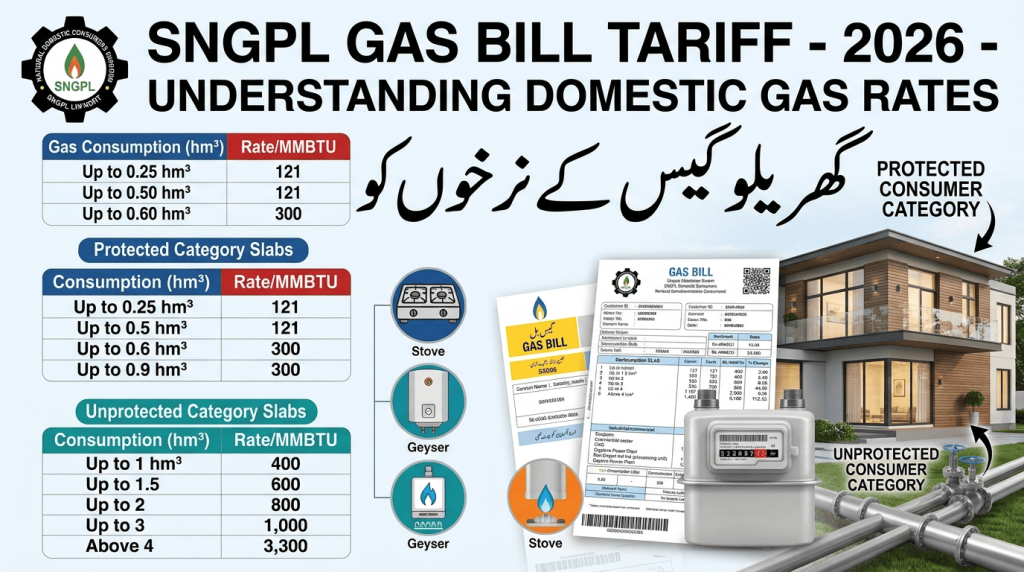
An SNGPL bill currently displays domestic gas rates based on consumption slabs. For example, one current SNGPL bill identifies the applicable gas rates as effective from July 1, 2025, with different rates per MMBTU for different consumption ranges.
| Consumption Slab | Example Rate Structure |
|---|---|
| Up to 0.25 HM3 | Rs. 200 per MMBTU |
| Up to 0.50 HM3 | Rs. 250 per MMBTU |
| Up to 0.60 HM3 | Rs. 300 per MMBTU |
| Up to 0.90 HM3 | Rs. 350 per MMBTU |
Important: These figures are an example of the tariff information displayed on a current SNGPL bill and should not be treated as a permanent 2026 tariff schedule. Consumers should verify the latest applicable notification before calculating a bill.
What Is HM3 in an SNGPL Bill?
HM3 is a unit used to represent gas volume in the billing system. Your SNGPL bill normally includes current and previous meter readings and calculates the difference to determine consumption.
The bill may also display conversion-related information such as the billing factor, GCV, and MMBTU. These calculations help determine the applicable gas charges based on the measured consumption.
Fixed Charges on SNGPL Domestic Bills
Fixed charges are another important part of the monthly gas bill. These charges can apply separately from the gas consumption charge.
For example, a current SNGPL domestic bill displays Rs. 600 in fixed charges for the applicable protected category. The exact fixed charge depends on the consumer category and the tariff applicable to that account.
This means that even when gas consumption is relatively low, the final bill may still include fixed charges and applicable taxes.
Why Your SNGPL Bill Can Increase
There are several reasons why an SNGPL bill may become higher than the previous month’s bill.
1. Higher Gas Consumption
Using gas appliances for longer periods can increase total consumption. Heating appliances, geysers, and cooking equipment can all contribute to higher usage.
2. Higher Tariff Slab
If consumption increases enough to move into another slab, the applicable rate may also change.
3. Fixed Charges
Fixed charges can contribute to the total bill independently of consumption.
4. Taxes and Adjustments
GST and other applicable adjustments can increase or decrease the final payable amount.
5. Seasonal Usage
Gas consumption can vary significantly between summer and winter. Households commonly use more gas during colder months because of heating and water-heating requirements.
Protected and Non-Protected Consumers
Domestic gas consumers can fall into different categories under the applicable tariff structure. The classification can affect the rates and charges applied to the bill.
SNGPL bills can identify the applicable tariff/category, so consumers should check their bill rather than assuming that every domestic customer has exactly the same rate.
This is especially important when comparing your bill with that of another household.
How to Check Your SNGPL Gas Bill
You can review your latest bill to understand how the tariff has affected your payable amount.
Look for these details:
- Billing month
- Current meter reading
- Previous meter reading
- Gas consumption
- Applicable tariff
- Gas charges
- Fixed charges
- Meter rent
- GST
- Total amount due
SNGPL provides online customer services, including access to gas bills and bill-related information.
SNGPL Tariff vs Total Bill Amount
It is important to understand that the gas tariff is not the same as the total bill amount.
The tariff determines the applicable price for gas consumption, while the final bill can contain several additional components.
For example:
Gas consumption charges + fixed charges + meter rent + applicable taxes/adjustments = final bill amount
This is why two households with similar consumption may not necessarily receive exactly the same payable amount.
How to Reduce Your SNGPL Gas Bill
Consumers can take practical steps to control gas consumption and avoid unnecessary charges.
Use Gas Appliances Efficiently
Avoid keeping burners or other appliances running longer than necessary.
Check for Gas Leakage
A suspected gas leak should be treated seriously. Contact the relevant gas utility rather than attempting unsafe repairs yourself.
Maintain Appliances
Poorly maintained appliances may not operate efficiently. Professional inspection can help identify problems.
Monitor Monthly Consumption
Compare your current HM3 consumption with previous months. Regular monitoring makes unusual increases easier to identify.
Pay Before the Due Date
Late payment can result in additional charges where applicable. Check the due date printed on your bill.
SNGPL Gas Tariff 2026 – Important Points
Before estimating your monthly bill, remember these points:
- Tariff rates can change through official notifications.
- Different consumer categories can have different charges.
- Gas consumption is an important factor in determining the bill.
- Fixed charges can apply separately.
- GST and other adjustments can affect the final amount.
- Your actual SNGPL bill remains the best source for your account-specific charges.
- OGRA publishes consumer gas pricing information, while SNGPL applies the relevant rates to billing.
Frequently Asked Questions
OGRA Consumer Gas PricesWhat is SNGPL Gas Bill Tariff 2026?
SNGPL Gas Bill Tariff 2026 refers to the applicable pricing structure used to calculate natural gas charges for SNGPL consumers during 2026.
How is an SNGPL domestic bill calculated?
The bill can include gas consumption charges, applicable tariff rates, fixed charges, meter rent, GST, and other adjustments.
What does HM3 mean on an SNGPL bill?
HM3 is a gas-volume measurement used in the billing process. Your bill uses meter readings and relevant conversion factors to determine consumption and charges.
Can SNGPL gas rates change?
Yes. Gas prices and tariff structures can be revised through applicable regulatory or government notifications. Consumers should check the latest official information before relying on an old rate table.
Why is my SNGPL bill higher in winter?
Gas consumption can increase during colder months because households may use more gas for heating and hot water. Higher consumption can therefore result in higher charges.
Conclusion
Understanding SNGPL Gas Bill Tariff 2026 makes it easier to read your monthly gas bill and understand where the payable amount comes from. Instead of looking only at the total amount, check your consumption, tariff category, gas charges, fixed charges, meter rent, GST, and any adjustments.
Because gas prices and applicable charges can be revised, always verify the latest information through official SNGPL and OGRA resources before calculating an expected bill. SNGPL also provides online bill and customer-service facilities for consumers.