SNGPL Estimated Bill – 7 Ways to Understand and Correct Your Gas Bill
Receiving an unexpectedly high gas bill can be frustrating, especially when your actual gas consumption seems lower than the amount shown. One possible reason is an SNGPL Estimated Bill, which may be generated when the gas company cannot obtain an actual meter reading during the billing cycle. Understanding how estimated billing works can help you identify incorrect charges and take the right steps to resolve billing problems.
Sui Northern Gas Pipelines Limited (SNGPL) provides natural gas services to consumers across several regions of Pakistan. Its monthly billing process generally depends on meter readings, applicable tariffs, fixed charges, taxes, and other billing adjustments. When an actual meter reading is unavailable, an estimated reading may be used according to the applicable billing procedure.
In this guide, you will learn how to check your SNGPL Estimated Bill, understand estimated units, identify possible mistakes, and request a correction if your bill does not match your actual consumption.
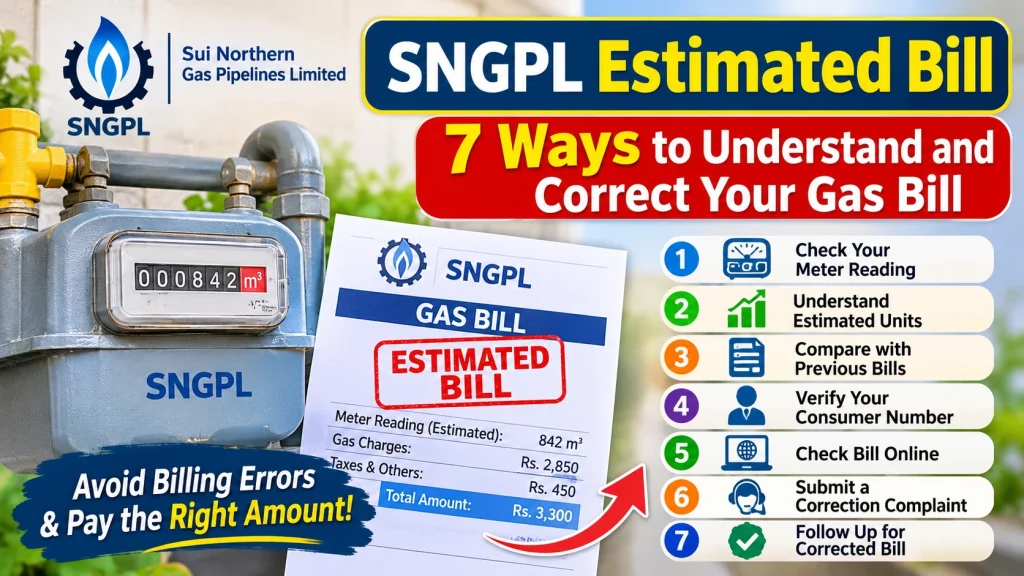
What Is an SNGPL Estimated Bill?
An SNGPL Estimated Bill is a gas bill calculated using an estimated meter reading instead of a confirmed actual reading for the relevant billing period.
Normally, an SNGPL meter reader visits the property and records the meter reading. However, sometimes an actual reading cannot be obtained because of an inaccessible meter, locked premises, damaged meter conditions, or other operational issues.
In such situations, the billing system may use an estimated consumption figure based on available billing information and applicable procedures.
For example, if your previous monthly consumption was 80 cubic meters, your estimated bill might be calculated using an estimated quantity. This is only an illustrative example; the actual estimate depends on the company’s billing method.
An estimated bill does not automatically mean that your gas meter is faulty or that the company has made a mistake. However, checking the reading and billed units is important to avoid paying incorrect charges.
7 Ways to Understand and Correct Your SNGPL Estimated Bill
The following seven methods can help you understand why your bill was estimated and what to do if you find an error.
1. Check Your SNGPL Meter Reading
The first step is to compare the meter reading printed on your bill with the current reading displayed on your physical gas meter.
Follow these steps:
- Locate your gas meter outside or inside your property.
- Check the digits displayed on the meter.
- Find the meter reading section on your latest SNGPL bill.
- Compare the actual reading with the billed reading.
- Take a clear photograph of your meter for reference.
If the reading printed on your bill is different from the actual meter reading, keep the photograph as evidence.
Remember that the meter reading date matters. Your current reading may naturally be higher than the reading printed on an older bill.
2. Understand Estimated Units and Gas Consumption
Estimated units are the quantities used by the billing system to calculate your gas charges when an actual reading is unavailable.
To understand your estimated consumption, compare your recent bills with previous months.
For example:
| Billing Month | Consumption |
|---|---|
| January | 65 units |
| February | 72 units |
| March | 68 units |
| April | 110 estimated units |
In this example, April’s estimated consumption is higher than the previous months. This difference may require further checking.
However, gas consumption can increase because of seasonal usage, heating requirements, or changes in household activity.
Always compare similar billing periods rather than assuming that every increase is a billing error.
3. Compare Your Current Bill with Previous Bills
Your previous SNGPL bills can help you identify unusual changes in consumption and charges.
Check the following details:
- Previous meter readings.
- Current or estimated meter reading.
- Monthly gas consumption.
- Billing period and number of days.
- Gas charges and applicable taxes.
- Previous balance and outstanding amounts.
If your latest bill contains significantly higher charges without a clear reason, investigate the reading and tariff details.
Keeping copies of your previous bills is useful when submitting a billing complaint because they provide a record of your consumption history.
4. Check Your Consumer Number and Billing Information
Incorrect consumer information can create confusion when checking or reporting an estimated bill.
Before contacting SNGPL, verify these details:
- Consumer number.
- Name of the registered consumer.
- Service address.
- Meter number.
- Billing month.
- Reference information printed on the bill.
Make sure you are checking the bill associated with your own gas connection.
If you use an online bill-checking service, enter the correct consumer number to avoid viewing another connection’s information.
5. Download Your Latest SNGPL Bill Online
Checking your latest bill online can help you review the billing information without waiting for a printed copy.
You can visit the official SNGPL website and look for its consumer billing or bill inquiry facility.
Follow these general steps:
- Open the official SNGPL website.
- Find the online bill or consumer services section.
- Enter the required consumer information.
- Submit the details.
- View your available billing information.
- Download or print the bill if the service provides that option.
Official website: https://www.sngpl.com.pk/
Keep in mind that online bill availability and features may change. If the bill is not available, contact SNGPL through its official customer service channels.
6. Submit an SNGPL Billing Correction Complaint
If you believe your SNGPL Estimated Bill contains an incorrect meter reading or consumption amount, you should contact the company and request a billing review.
Prepare the following information before submitting your complaint:
- Consumer number.
- Meter number.
- Copy of the disputed bill.
- Clear photograph of the actual meter reading.
- Previous bills, if available.
- Brief explanation of the billing problem.
Explain why you believe the estimated reading is incorrect and request verification of the actual meter reading.
You can use the official SNGPL website to find the available complaint registration and customer support options.
Important: Keep your complaint reference or tracking number so you can follow up on the matter.
7. Follow Up and Verify Your Corrected Bill
Submitting a complaint is not the final step. You should also check whether SNGPL has reviewed your request and updated the billing information.
Follow these steps:
- Keep your complaint reference number safe.
- Contact customer support if you do not receive an update.
- Ask whether an actual meter reading has been verified.
- Check your next available bill.
- Review any adjustment or correction shown in the billing details.
If an adjustment is approved, verify that the corrected amount is reflected in your account.
Do not assume that submitting a complaint automatically cancels the disputed charges. Ask SNGPL about the applicable payment requirements and any available correction procedure while your complaint is being reviewed.
Why Does SNGPL Generate an Estimated Gas Bill?
There are several possible reasons why your monthly gas bill may be based on an estimated reading instead of an actual meter reading.
Common reasons include:
- Meter inaccessible: The meter reader cannot reach the gas meter.
- Locked premises: Nobody is available to provide access to the meter.
- Meter reading difficulties: The meter display is unclear or difficult to read.
- Operational issues: The scheduled meter reading may not be completed.
- Meter damage: A damaged or malfunctioning meter may require inspection.
These are possible reasons, not confirmation of the cause in every case. Contact SNGPL if you need to know why your particular bill was estimated.
What Should You Do If Your Estimated Gas Bill Is Too High?
If your estimated gas bill is much higher than your normal monthly bill, do not immediately assume that all the charges are incorrect.
First, compare the meter reading, consumption, billing period, and previous bills. Then contact SNGPL and request a verification of the reading.
You should also keep a photograph of the current meter reading and copies of your previous bills. These documents can help the company investigate your complaint.
If the company confirms an incorrect estimate, ask about the applicable adjustment procedure and verify the correction on your subsequent bill.
Actual Meter Reading vs Estimated Meter Reading
Understanding the difference between actual and estimated readings can help you identify billing problems.
| Actual Meter Reading | Estimated Meter Reading |
|---|---|
| Recorded from the physical meter | Calculated using available billing information |
| Represents a recorded meter reading | Represents estimated consumption |
| Helps determine actual usage | May differ from actual usage |
| Can be verified against the meter | May require further verification |
An actual reading is generally the better reference for determining consumption. However, estimated billing may be used under applicable circumstances and procedures.
How to Avoid Problems with Future SNGPL Estimated Bills
You can take a few simple precautions to reduce the chances of future billing confusion.
- Keep your gas meter accessible for scheduled readings.
- Check your meter regularly.
- Save copies of monthly gas bills.
- Compare consumption with previous billing periods.
- Report damaged or unclear meter displays.
- Keep your consumer information updated.
- Contact SNGPL if you repeatedly receive estimated bills.
These habits can help you identify unusual billing changes earlier and provide useful evidence if you need to submit a complaint.
Frequently Asked Questions (FAQs)
1. What is an SNGPL Estimated Bill?
An SNGPL Estimated Bill is generated using estimated meter readings when an actual reading is unavailable for a billing period. The estimated consumption is used to calculate the applicable gas charges.
2. Why is my SNGPL bill estimated?
Your bill may be estimated because the meter was inaccessible, the premises were locked, a reading could not be obtained, or another operational issue prevented an actual reading.
3. How can I check my actual SNGPL meter reading?
Visit your physical gas meter and note the displayed reading. Compare it with the meter reading printed on your latest bill, keeping the billing date in mind.
4. Can I correct an incorrect SNGPL Estimated Bill?
Yes. If you believe your bill contains an incorrect estimate, contact SNGPL and request a billing review. Provide your consumer number, disputed bill, meter photograph, and previous billing records.
5. Does SNGPL adjust estimated units in the next bill?
An adjustment may be made after an actual reading or billing review, depending on the applicable billing procedure and the company’s verification. Check your subsequent bill or contact customer support for confirmation.
6. Where can I check my SNGPL bill online?
You can visit the official SNGPL website at https://www.sngpl.com.pk/ and look for the available consumer billing services.
7. Should I pay an estimated SNGPL bill?
Check the bill’s due date and payment instructions. If you believe the amount is incorrect, contact SNGPL immediately to ask about the disputed amount and applicable payment requirements. Do not assume that a complaint automatically suspends payment obligations.
Conclusion
An SNGPL Estimated Bill can sometimes create confusion, especially when the estimated consumption is higher than your normal gas usage. However, checking your meter reading, comparing previous bills, reviewing estimated units, and contacting SNGPL can help you understand the problem.
The seven methods discussed in this guide provide a practical way to identify possible billing errors and request corrections. Always keep your meter readings and previous bills as evidence, and follow up on complaints until you receive a clear response.
By regularly checking your gas consumption and keeping your meter accessible, you can reduce billing confusion and manage your monthly gas expenses more effectively.