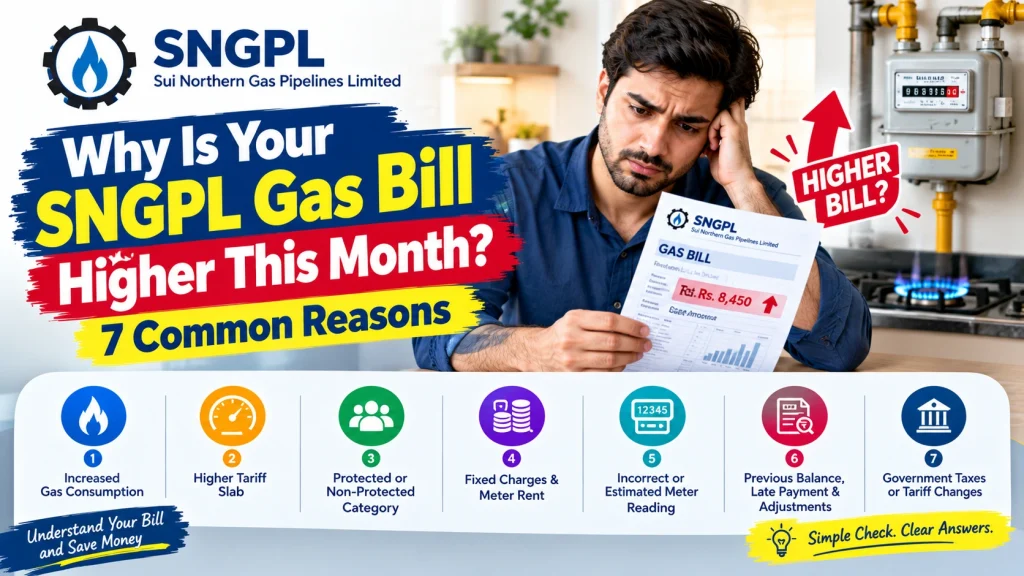
Why Is Your SNGPL Gas Bill Higher This Month? 7 Common Reasons
Have you received your gas bill and noticed that the amount is much higher than last month? You are not alone. Many SNGPL customers become concerned when their monthly bill increases even though they believe their household gas usage has remained almost the same.
If your SNGPL Gas Bill Higher This Month is a concern, the first step is to understand how gas consumption, tariff slabs, fixed charges, taxes, and previous balances affect the final amount. A higher bill does not always mean that your gas meter is faulty.
This guide explains seven common reasons for an increased SNGPL bill, how to check your bill details, and what you can do if you find an incorrect charge.
1. Increased Gas Consumption
One of the most common reasons for a higher gas bill is increased household consumption. Even a small change in daily usage can affect your monthly charges.
Gas consumption may increase because of:
- Using a gas heater for longer periods.
- Running a geyser throughout the day.
- Cooking more frequently.
- Keeping multiple gas appliances running.
- A leaking gas appliance or faulty connection.
During colder months, households generally use more gas for heating water and keeping rooms warm. This additional consumption can increase the amount shown on your bill.
What to do: Compare the gas consumption shown in HM³ on your current and previous bills. This helps you determine whether you actually used more gas.
2. Your Gas Consumption Has Moved to a Higher Tariff Slab
SNGPL domestic gas billing uses applicable tariff slabs. When consumption increases, the applicable rate structure can also increase your gas charges.
This means that using slightly more gas may sometimes result in a noticeable difference in the bill, depending on your consumer category and applicable tariff.
Your bill contains gas consumption and billing details that you can compare with previous months.
What to do: Check your consumption, tariff category, and gas charges. Do not compare only the final payable amount; compare the actual consumption and applicable charges as well.
3. Your Protected or Non-Protected Category Affects the Bill
Another important reason for a higher SNGPL gas bill is the consumer category.
Domestic consumers may fall under protected or non-protected categories according to the applicable government tariff rules. These categories can have different gas rates and fixed charges.
Under the published tariff framework, protected status is determined using average gas consumption during the four winter months, November through February. Therefore, your category may affect bills even when your current month’s consumption is relatively low.
What to do: Look for the tariff or consumer category printed on your bill. If you believe your category has been applied incorrectly, contact SNGPL and request clarification.
4. Monthly Fixed Charges and Meter Rent
Your gas bill is not calculated only from the amount of gas you consume. It may also include fixed monthly charges and meter rent.
These charges can make your bill higher even when your gas usage is low.
Check these items on your bill:
- Gas charges
- Fixed charges
- Meter rent
- General Sales Tax (GST)
- Any applicable adjustments
For this reason, switching off a heater or reducing cooking time may not remove every charge from your monthly bill.
5. Incorrect or Estimated Meter Reading
A meter-reading issue can also cause an unexpectedly high bill.
For example, the reading may be recorded incorrectly, or the bill may be issued using an estimated or provisional reading when an actual reading is unavailable.
If the recorded reading is higher than the actual meter reading, the calculated consumption may also be incorrect.
What to do:
- Find the current meter reading printed on your bill.
- Check the reading displayed on your physical gas meter.
- Compare the digits carefully.
- Take a clear photograph of the meter showing the reading.
- Contact SNGPL if you find a significant difference.
Do not attempt to open, adjust, or repair the gas meter yourself.
6. Previous Balance, Late Payment Surcharge, or Adjustments
Sometimes the current month’s gas charges are normal, but the total payable amount is higher because of an outstanding balance or another billing adjustment.
Your bill may include:
- Previous unpaid balance or arrears.
- Late payment surcharge.
- Previous billing adjustments.
- Other applicable charges.
For example, if your current gas charges are Rs. 1,200 but an earlier balance of Rs. 800 is added, your total payable amount becomes Rs. 2,000 before any other applicable charges.
What to do: Check the arrears, adjustment, and late payment sections separately. If you have already paid an earlier bill but the amount still appears outstanding, keep your payment receipt and ask SNGPL to verify the account.
7. Government Taxes or Tariff Changes
Government-approved gas tariffs and applicable taxes can also affect your monthly bill.
When the applicable gas rates or fixed charges change, consumers may notice a higher payable amount even if their consumption has not changed significantly.
OGRA and government decisions determine the applicable gas pricing framework. For example, revised gas prices and domestic fixed charges were announced for the 2025–26 financial year, effective July 1, 2025.
What to do: Check the tariff information and billing period on your bill. Use current official tariff notifications rather than relying on old rates published on unrelated websites.
How to Check Why Your SNGPL Gas Bill Higher This Month
You can investigate a higher bill by comparing your current bill with the previous month’s bill.
Follow these steps:
- Open the official SNGPL website.
- Use the online bill facility to view your latest bill.
- Compare current and previous gas consumption in HM³.
- Check your consumer category and tariff details.
- Review fixed charges, meter rent, and GST.
- Check whether any arrears or late payment charges have been added.
- Compare the meter reading on the bill with your physical gas meter.
This comparison can help you identify whether the increase is related to consumption, tariff, additional charges, or a possible billing error.
What Should You Do If Your SNGPL Bill Is Incorrect?
If you have checked the details and still believe your bill is incorrect, you should register a complaint with SNGPL.
Before contacting the company, prepare:
- Your SNGPL consumer number.
- A copy of the current gas bill.
- A previous bill for comparison.
- A clear photograph of your gas meter.
- Payment receipts, if a previous payment is missing.
Visit the official SNGPL website to find the appropriate customer service or complaint channel. Explain the issue clearly and request verification of the meter reading, consumption, or disputed charges.
Keep your complaint reference number so you can follow up on the request.
Frequently Asked Questions
Why is my SNGPL gas bill high even when I use less gas?
Your bill may include fixed charges, meter rent, GST, arrears, or adjustments. Check these items along with your actual gas consumption.
Does winter gas usage affect my SNGPL bill?
Yes. Winter usage can increase gas consumption and may also affect the protected or non-protected category assessment under the applicable tariff rules.
Can an incorrect meter reading increase my gas bill?
Yes. If the recorded reading is higher than the actual reading, your calculated gas consumption and charges may also increase.
How can I check my previous SNGPL gas bills?
Use the online bill facility on the official SNGPL website, where available, or keep copies of your previous bills to compare consumption and charges.
Where can I complain about a high SNGPL bill?
You can visit the official SNGPL website and use its customer service or complaint facilities to report incorrect readings or disputed charges.
Conclusion
If your SNGPL Gas Bill Higher This Month has become a concern, do not assume that the meter is faulty or that your gas consumption has suddenly increased. First, compare your current and previous bills and review the consumption, tariff category, fixed charges, taxes, and outstanding balance.
If the meter reading or billing details appear incorrect, contact SNGPL with your consumer number, bills, and meter photograph. Checking these details carefully can help you understand the increase and take the right steps to resolve a billing problem.